What Are the Top Outdoor Furniture Manufacturers in China?

Time:2026-09-09 Author:Liam
0%

Choosing the right Outdoor Furniture manufacturer in China requires more than comparing attractive product photos. This guide explores leading manufacturers through practical criteria, including production experience, material quality, design capability, export performance, and customer support. It considers factories producing aluminum dining sets, teak loungers, rope chairs, rattan sofas, and weather-resistant umbrellas. These details matter when furniture must survive strong sunlight, heavy rain, coastal air, or daily hospitality use.

A reliable manufacturer should provide clear specifications, stable sampling, documented quality inspections, and realistic delivery schedules. Buyers should examine frame thickness, welding points, powder-coating systems, fabric grades, packaging strength, and replacement-part policies. Factory audits and independent inspections can reveal more than a polished showroom. Certifications may support credibility, but they should be verified rather than accepted blindly. No ranking is perfect. A large exporter may offer efficient logistics but limited customization. A smaller factory may provide careful craftsmanship but weaker production capacity. That trade-off deserves honest attention. This overview will compare China’s top outdoor furniture manufacturers with a balanced, evidence-based approach. It will highlight their main product strengths, manufacturing capabilities, market experience, and potential limitations. Readers can then ask better questions before requesting samples or signing a purchase agreement. Small details matter. A chair that looks elegant in a catalog may feel unstable on a tiled patio. A sofa with attractive fabric may fade after one summer. Practical testing remains essential.
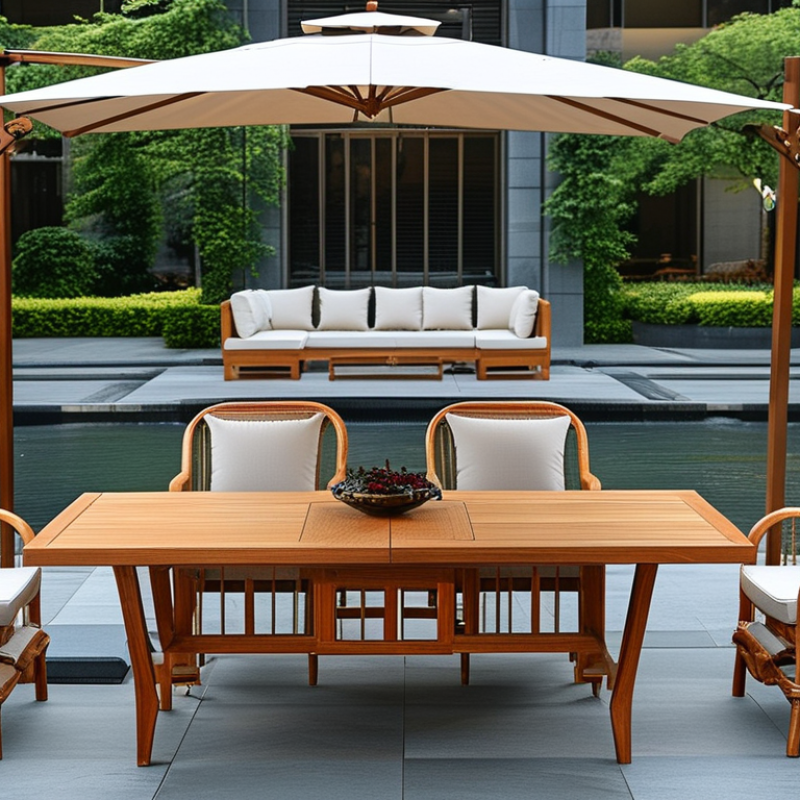
What Are the Top Outdoor Furniture Manufacturers in China?

Defining China’s Outdoor Furniture Manufacturing Landscape

China’s outdoor furniture manufacturing landscape is broad, regional, and highly specialized. According to CSIL’s World Furniture Outlook 2024, China remains the world’s largest furniture producer and exporter, contributing roughly one-third of global furniture output. Outdoor production is concentrated in coastal manufacturing clusters, where factories combine aluminum welding, rope weaving, powder coating, and textile cutting under one supply network.

The strongest manufacturers usually serve commercial and residential buyers at the same time. They offer modular sofas, stackable chairs, dining sets, and custom hotel furniture. Their advantage is not only low production cost. It is the ability to adjust dimensions, fabrics, finishes, and packaging for different markets. UN Comtrade data consistently places China among the leading exporters of furniture products, including outdoor categories under HS 9403. Still, export volume does not automatically prove quality.

Materials reveal more than catalog photos. Experienced buyers inspect alloy thickness, drainage holes, coating adhesion, foam density, and stitching tension. Reports from the International Organization for Standardization also emphasize durability testing and chemical safety in furniture supply chains. A reliable factory should provide traceable material records, inspection reports, and realistic weathering data. Some suppliers do this well. Others provide attractive samples but weak production controls. That gap deserves attention.

China’s manufacturing landscape is therefore competitive, but not uniform. The best sourcing decisions depend on factory audits, sample testing, production experience, and clear technical drawings. Price remains important. It should not lead the conversation.

Key Regions and Production Hubs for Outdoor Furniture

China’s outdoor furniture industry is concentrated in several practical production hubs. Guangdong remains a major center, especially around Foshan, Zhongshan, and Jiangmen. These areas offer aluminum welding, powder coating, rattan weaving, and large-scale assembly. Factories often serve resort, restaurant, and residential projects. Their strength is flexible production and access to nearby hardware suppliers.

Zhejiang is another important region. Ningbo and Taizhou support metal processing, plastic molding, and export-oriented manufacturing. Many suppliers here produce stackable chairs, folding tables, and lightweight patio sets. The region’s logistics network helps move containers efficiently through eastern ports. However, low prices can sometimes hide differences in coating thickness, fastener quality, and inspection routines.

Fujian also deserves attention, particularly for factories linked to metalwork and outdoor leisure products. When evaluating manufacturers, buyers should inspect welding points, drainage holes, fabric stitching, and carton protection. Ask for salt-spray testing when products will face coastal weather. A factory may provide attractive samples but struggle with consistent mass production. That risk is real. Production records, material certificates, and pre-shipment inspections offer stronger evidence than polished catalogs. Supplier directories can become outdated, so current factory visits or live video checks are useful. No region excels at everything. A careful buyer should match the hub’s capabilities with the project’s climate, volume, and design requirements.

Leading Chinese Outdoor Furniture Manufacturers by Product Type

What Are the Top Outdoor Furniture Manufacturers in China?

Chinese outdoor furniture manufacturers are often strongest when grouped by product type. Aluminum furniture factories focus on lightweight frames, powder coating, and rust-resistant construction. Their products suit balconies, hotels, and large patios. Many manufacturers also produce steel tables and chairs for commercial projects. These factories usually offer stronger structures, but steel may require better surface protection in coastal climates.

Synthetic rattan manufacturers specialize in woven chairs, sofas, and dining sets. Skilled workers check the weave by hand, especially around corners and armrests. The best factories use UV-resistant material and fast-drying cushions. However, weave quality can vary between samples and mass production. A careful buyer should inspect several production pieces, not only one showroom sample.

Wood furniture factories commonly work with teak, acacia, or treated hardwood. They produce loungers, benches, and folding dining furniture. Teak handles outdoor moisture well, while acacia offers a lower-cost alternative with proper sealing. Cushion manufacturers are also important because fabric, foam density, stitching, and drainage affect daily comfort. From practical sourcing experience, factory audits should review moisture control, packaging strength, and replacement-part access. No supplier is perfect. Even an experienced factory may miss a small finish defect. Clear drawings, material approvals, and pre-shipment inspections reduce that risk. Reliable manufacturers explain limitations instead of promising everything.

Materials, Manufacturing Standards, and Quality Evaluation

Outdoor furniture manufacturers in China commonly work with aluminum, stainless steel, teak, and synthetic rattan. Each material demands different controls. Aluminum frames should have consistent wall thickness and clean welds. Stainless steel needs corrosion-resistant grades and smooth polishing. Teak requires stable moisture levels, tight joints, and responsible sourcing records. Synthetic rattan should resist ultraviolet exposure, cracking, and color fading.

Manufacturing standards matter beyond a factory certificate. Ask for documented inspection procedures, material reports, coating thickness records, and load-test results. Powder coating should cover corners evenly, without bubbles or exposed metal. Check drainage holes under tabletops and inside hollow frames. Small details often reveal production discipline. A reliable factory usually maintains sample approval, batch tracking, and final inspection records. Still, paperwork is not proof by itself.

I have found that hands-on checks can expose problems missed in photographs. Sit on a chair, move it across a hard surface, and inspect every joint. Listen for creaking. It matters. Measure several pieces from one shipment because dimensions may vary slightly. A flawless showroom sample can hide inconsistent mass production. That risk deserves honest discussion. Even experienced buyers can overlook packaging damage, weak hardware, or fading after one season. Independent inspections and controlled outdoor testing provide stronger evidence than attractive catalogs. Quality evaluation should consider climate, maintenance, intended weight, and years of use, not appearance alone.

What Are the Top Outdoor Furniture Manufacturers in China? - Materials, Manufacturing Standards, and Quality Evaluation
Evaluation Dimension Common Material or Process Relevant Standard or Test Method Practical Quality Benchmark Evidence to Request from a Manufacturer Evaluation Priority
Aluminum Frames Extruded or die-cast aluminum, commonly using 6061 or 6063 alloys Material certificates; dimensional inspection; welding inspection; ISO 9227 salt-spray testing for coated surfaces Consistent wall thickness, accurate joints, smooth welds, no visible porosity, cracking, sharp edges, or structural distortion Alloy certificate, welding inspection records, frame drawings, load-test reports, and coating test results Very High
Steel Frames Galvanized steel, stainless steel, or carbon steel with an outdoor protective coating ISO 9227 for corrosion resistance; ISO 1461 where hot-dip galvanizing is used; EN 581 structural testing where applicable Complete corrosion protection at welds, joints, tube ends, and drainage points; no exposed untreated steel Steel grade documentation, coating thickness records, corrosion-test reports, and weld-quality inspection records Very High
Powder Coating Outdoor-grade polyester powder coating applied over a prepared metal surface AAMA 2603, AAMA 2604, or AAMA 2605 performance specifications; ISO 2409 adhesion test; ISO 2813 gloss measurement Uniform color and gloss, strong adhesion, adequate film thickness, and resistance to chalking, fading, impact, and humidity Powder-coating technical data sheet, pretreatment process, film-thickness records, adhesion results, and accelerated-weathering data Very High
Synthetic Rattan and Woven Materials UV-stabilized polyethylene or polypropylene wicker designed for outdoor exposure UV-weathering evaluation; tensile and tear testing; colorfastness assessment; EN 581 testing for the completed seating product Even weave tension, secure wrapping at corners, no brittle strands, no exposed frame, and limited color change after accelerated UV exposure Polymer specification, UV stabilizer information, weathering report, strand dimensions, and finished-product photographs High
Outdoor Fabrics Solution-dyed acrylic, solution-dyed polyester, or other UV-resistant upholstery fabric ISO 105-B02 or AATCC 16 for lightfastness; ISO 6330 for washing; ASTM D5034 or equivalent for tensile strength Stable color, resistance to mildew and moisture, durable seams, reliable zippers, and adequate abrasion resistance for intended use Fiber composition, lightfastness rating, abrasion data, water-repellent finish information, seam specifications, and care instructions High
Wood Components Teak, acacia, eucalyptus, or other wood suitable for exterior applications Moisture-content inspection; species identification; preservative or coating documentation; chain-of-custody documentation when certified timber is specified Controlled moisture content, stable grain, sealed end grain, smooth sanding, drainage design, and no major knots or structural cracks Wood species declaration, moisture records, treatment details, finishing specification, and responsible-sourcing documentation where required High
Fasteners and Hardware Stainless steel or corrosion-protected screws, bolts, hinges, glides, and adjustment components Material-grade verification; torque inspection; corrosion testing; dimensional and functional inspection Hardware remains tight during use, threads are undamaged, moving parts operate smoothly, and dissimilar-metal corrosion is controlled Fastener material declaration, torque specifications, hardware drawings, incoming inspection records, and replacement-part list High
Structural Safety Finished chairs, tables, loungers, benches, and modular seating systems EN 581-1 general safety requirements; EN 581-2 seating mechanical-safety tests; EN 581-3 table mechanical-safety tests where relevant No tipping, collapse, excessive permanent deformation, dangerous gaps, unstable joints, or entrapment hazards under specified loads Third-party test report, internal load-test procedure, product drawings, allowable-load information, and corrective-action records Critical
Manufacturing Quality Control Incoming inspection, first-article approval, in-process control, final inspection, and traceability ISO 9001-based quality-management practices; documented sampling plans such as ISO 2859-1 where used Repeatable dimensions, controlled critical-to-quality points, clear defect classifications, and traceable inspection records by batch Quality manual, inspection checklist, sampling plan, nonconformance procedure, batch records, and calibration certificates Very High
Packaging and Export Readiness Moisture-resistant packaging, protective separators, carton reinforcement, and export labeling ISTA packaging tests where specified; ISPM 15 requirements for regulated solid-wood packaging No coating abrasion, frame deformation, fabric compression damage, or hardware loss after normal international transport handling Packaging specification, carton drop or vibration-test results, container-loading plan, product labels, and packing-list controls Medium to High
Supplier Capability Assessment Integrated design, prototyping, tooling, production, testing, and after-sales support Capability audit based on documented procedures, production capacity, equipment maintenance, and corrective-action performance Stable lead times, controlled prototype changes, adequate testing equipment, transparent subcontracting, and reliable spare-parts support Factory-audit report, equipment list, capacity plan, sample approval records, production lead-time data, and warranty policy Very High
Quality rankings should be based on the specific product category, destination-market requirements, independent test reports, factory-audit findings, and verified production samples rather than on price or catalog appearance alone.

How to Select a Reliable Outdoor Furniture Manufacturer in China

Choosing among China’s outdoor furniture manufacturers requires more than comparing catalog prices. The best factory is not always the largest. In practical sourcing, I check whether it controls cutting, welding, finishing, and packing under one roof. This can reduce delays and inconsistent color. Ask for factory videos, recent production photos, and a live video inspection. Vague answers deserve caution. Small details matter.

Request a sample using the same aluminum grade, fabric, coating, and hardware planned for mass production. Leave it outdoors through rain, strong sunlight, and repeated folding. Check welds, drainage holes, edge smoothness, screw alignment, and carton strength. Ask for test reports matching the actual materials, not unrelated products. Confirm load limits, care instructions, replacement parts, and warranty terms in writing. A polished sample can hide weak packaging.

Before placing a large order, review ownership information, export experience, quality procedures, and production capacity. An independent pre-shipment inspection can verify dimensions, color, quantity, and defects. Discuss acceptable quality limits before production begins. Keep payment milestones linked to approved samples and inspection results. Some factories promise every finish, yet their coating line cannot deliver consistent batches. That is a warning. No checklist is perfect. I still recheck critical details after approval. Reliable cooperation grows through clear records, direct communication, and evidence gathered before trust is extended.

FAQS

: Why is China a major outdoor furniture manufacturing hub?

: China produces roughly one-third of global furniture output. Its coastal clusters combine welding, weaving, coating, and textile cutting. This creates broad supplier options. Quality still varies.

Which outdoor furniture products do Chinese manufacturers commonly produce?

Common products include modular sofas, stackable chairs, dining sets, loungers, and hotel furniture. Factories often specialize in aluminum, steel, synthetic rattan, wood, or cushions. Product expertise differs by factory.

What materials should buyers inspect carefully?

Check alloy thickness, foam density, fabric strength, coating adhesion, and stitching tension. Also inspect drainage holes and hardware alignment. Catalog photos are not enough.

How can buyers evaluate an aluminum furniture factory?

Review welding quality, powder-coating consistency, frame thickness, and rust-resistant protection. Ask whether cutting, welding, finishing, and packing occur under one roof. Coastal use requires stronger surface protection.

Are synthetic rattan samples reliable indicators of mass-production quality?

Not always. Inspect several production pieces, especially corners and armrests. Check weave tension, UV resistance, cushion drying, and edge finishing. One perfect sample can mislead.

What should buyers know about outdoor wood furniture?

Teak generally handles moisture well, while acacia can reduce costs with proper sealing. Ask about moisture control, treatment records, and packaging strength. Wood can still crack or discolor.

How should buyers test a furniture sample?

Use the planned aluminum grade, fabric, coating, and hardware. Leave the sample outdoors during rain and strong sunlight. Test folding, drainage, welds, screw alignment, and carton strength. Real conditions reveal weaknesses.

What documents and inspections should buyers request?

Request material records, relevant test reports, technical drawings, warranty terms, and care instructions. Confirm that reports match the actual materials. Use pre-shipment inspection for dimensions, color, quantity, and visible defects. No checklist catches everything.

How can buyers reduce risks before placing a large order?

Review ownership information, export experience, quality procedures, and production capacity. Set payment milestones around approved samples and inspection results. Define acceptable quality limits before production. Keep records. Trust needs evidence.

Conclusion

China’s Outdoor Furniture manufacturing landscape is diverse, efficient, and highly specialized, serving both residential and commercial markets. Production is concentrated in several important industrial regions, each known for particular strengths such as metal fabrication, aluminum processing, rattan weaving, solid wood construction, or large-scale export operations. Manufacturers commonly offer a broad range of products, including lounge seating, dining sets, sun loungers, umbrellas, and customized outdoor solutions. Understanding these regional capabilities can help buyers match their project requirements with suitable production resources.

When evaluating an Outdoor Furniture manufacturer, buyers should examine material selection, structural design, surface treatments, weather resistance, production capacity, and quality-control procedures. Clear communication, sample approval, factory inspection, transparent documentation, and reliable delivery planning are also essential. A dependable partner should demonstrate consistent workmanship, flexible customization, responsible sourcing, and compliance with relevant safety and manufacturing standards. By comparing suppliers systematically rather than focusing only on price, importers can build stable cooperation and obtain durable, attractive, and practical outdoor products.


Liam

Liam

Liam is a dedicated marketing professional with a profound expertise in the industry, where he excels at highlighting the unique advantages of our core products. With a keen understanding of market trends and consumer needs, Liam frequently updates our company’s professional blog, providing......