Choosing among the best types of Office Desks starts with a simple question: what must your desk help you do? A compact writing desk can free a small bedroom corner. A spacious executive desk offers room for papers, screens, and daily planning. Sit-stand desks add movement, while corner desks make use of awkward floor space. The right choice depends on your tasks, room dimensions, and working habits—not just appearance.
Ergonomics researcher Dr. Alan Hedge is often credited with the advice, “The best posture is your next posture.” This idea points to an important detail: a desk should support movement and adjustment, not lock you into one position. Check whether the desktop fits your monitor, keyboard, and frequently used items. Measure the room, too; a desk that looks modest online can dominate a narrow space. Small details matter.
This guide compares common desk styles, including writing, computer, executive, corner, and sit-stand models. It considers space, storage, adjustability, and everyday comfort. No single desk suits everyone. Even a well-built desk may disappoint if its height or depth does not fit your setup. The comparisons ahead can help you identify practical trade-offs before you buy. One honest caveat: a desk alone cannot fix every discomfort; chair fit, screen placement, and regular movement matter too.
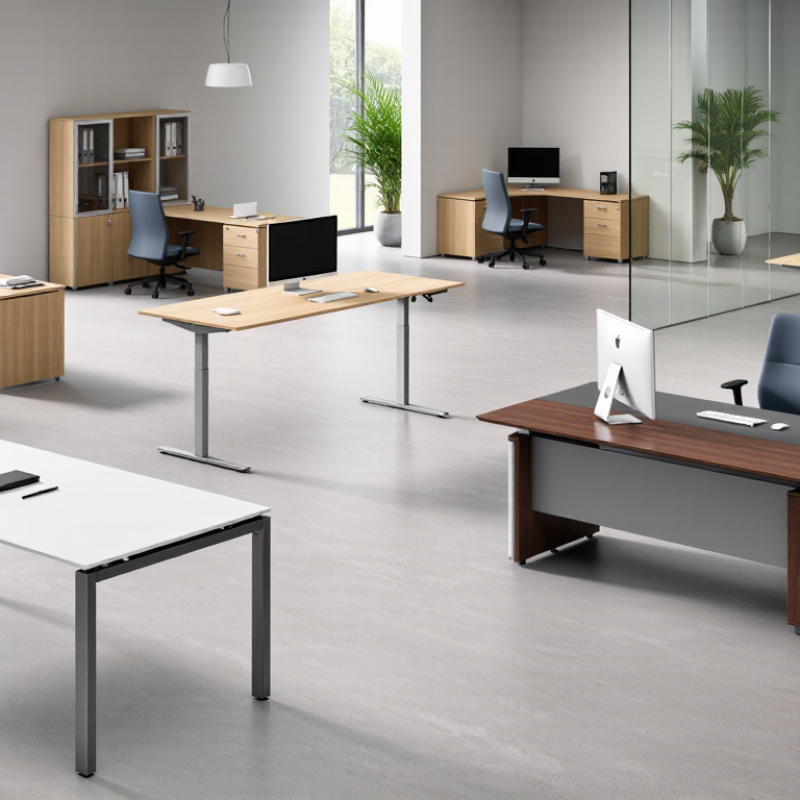
An effective office desk should fit the work, the person, and the available room. Surface area matters, but bigger is not always better. A laptop, notebook, water glass, and desk lamp need enough space without crowding the room. Measure the desk area before buying, and leave room to pull out a chair. Small detail. It changes daily comfort.
Stability and adjustability also shape a desk’s usefulness. A sturdy frame should not wobble when someone types or writes. If several people share the desk, adjustable height can help accommodate different users and tasks. Check whether the controls are easy to reach and whether the desk feels steady at its highest setting. Cable openings and a modest drawer can keep chargers and papers from spreading across the surface. They are not essential for everyone. In fact, extra storage can become clutter if it has no clear purpose.
Material affects maintenance as well as appearance. A smooth, durable surface is easier to wipe clean after coffee spills or pencil marks. Rounded edges may feel more comfortable during long work sessions, though personal preference varies. One point is easy to overlook: a desk cannot fix poor posture on its own. Pair it with a suitable chair, and adjust the screen and keyboard to support a relaxed working position. Even a well-designed desk may need a small change once daily use reveals what feels awkward.
Typical desktop height ranges by desk type (inches). Actual dimensions vary by model; adjustable desks should be set to suit the user and task.
Fixed and compact desks commonly sit around 28–30 inches high. Sit-stand desks offer a wider adjustment range, while drafting desks are generally taller for elevated work. Consider adjustability, surface area, and task needs when choosing a desk.
Office desks differ in shape, storage, and how they support daily tasks. A straight desk suits focused computer work and fits neatly against a wall. Choose a top deep enough for a monitor, keyboard, and writing space; otherwise, papers quickly crowd the screen. A corner desk uses room edges and gives separate zones for calls and paperwork. Its broad footprint can feel awkward in a small room, though.
Height-adjustable desks let users alternate between sitting and standing. A Cochrane review of workplace interventions found sit-stand desks reduced sitting time by about 100 minutes per workday in the short term, while noting that evidence quality was limited. Movement still matters. Executive desks usually add drawers and a larger surface, while compact writing desks trade storage for a lighter visual footprint. Shared offices may benefit from benching desks, which align workstations in rows but offer less privacy. Measure chair clearance and cable routes before choosing; a beautiful desk can still make the room frustrating. A small detail, often missed.
Office desks work best when they match the way people actually work. A focused analyst may need a broad, stable surface for a monitor, notebook, and reference papers. A compact writing desk can suit someone who mainly uses a laptop. Measure the room and equipment before choosing; a desk that looks spacious online may feel crowded beside a filing cabinet. Small details matter.
For people who alternate between sitting and standing, an adjustable desk can make position changes easier during the day. It still needs enough depth for a screen at a comfortable viewing distance. Team members who share materials may prefer a larger table-style desk, while reception staff often benefit from a work surface with a clear visitor-facing area. I’ve seen tidy plans go sideways when cables and daily supplies were forgotten. The desk is only part of the setup.
Tips: Note your most common tasks for a week. Measure the chair, screen, and walking space. Keep frequently used items within reach, but leave room to write. If possible, test the desk height before buying. A perfect layout is rare; adjust as your routine changes.
| Desk Type | How It Supports Work | Best Suited For | Typical Features | Considerations |
|---|---|---|---|---|
| Straight Desk | Provides a simple, open work surface for everyday computer use, writing, and meetings. | Focused individual work, home offices, and shared work areas. | Rectangular top; available in a range of widths and depths; may include drawers or cable openings. | Measure the room and allow enough depth for the monitor, keyboard, and comfortable viewing distance. |
| L-Shaped Desk | Creates separate work zones, such as one for computer tasks and another for paperwork or collaboration. | People who regularly switch between digital work and document-based tasks. | Two connected work surfaces; fits into a corner or can divide an open area. | Check the return’s orientation and confirm that the desk leaves adequate space for movement. |
| Height-Adjustable Desk | Allows the user to alternate between sitting and standing during the workday. | Workers who want more flexibility in posture and desk height. | Manual or powered height adjustment; often includes a memory control on powered models. | Use an appropriate chair and monitor setup when seated, and adjust the work surface to a comfortable standing height. |
| Compact Desk | Offers a dedicated work surface while using limited floor space. | Small rooms, apartments, occasional workstations, and minimalist setups. | Smaller footprint; may have a shallow top, shelves, or a foldable design. | Confirm that the surface can accommodate essential equipment without crowding the user. |
| Executive Desk | Provides a broad work area for computer use, paperwork, and in-person discussions. | People who need ample surface space and keep several work materials close at hand. | Large top; may include pedestals, drawers, or storage compartments. | Its larger size can dominate a room, so check dimensions, access routes, and storage needs first. |
| Writing Desk | Supports straightforward writing, reading, and laptop-based tasks with a clean, uncluttered layout. | Users who prefer a simple setup and do not need extensive built-in storage. | Open leg space; relatively simple top; often has few or no drawers. | Separate storage may be needed for files and supplies, and the surface may be too small for multiple monitors. |
| Treadmill Desk | Combines a height-adjustable work surface with slow-paced walking for light activity during suitable tasks. | Workers who want to add gentle movement while handling tasks that do not require precise movement. | Walking treadmill paired with a desk or adjustable work surface. | Walking can affect typing accuracy and concentration; start slowly and follow the equipment’s safety guidance. |
Choosing an office desk starts with the room, not the catalog. Measure the wall, chair clearance, and space needed to open drawers. A compact writing desk suits a bedroom corner or narrow home office, but its shallow top may leave little room for a monitor and paperwork. Small can feel cramped.
For storage, compare what you keep within reach with what can go elsewhere. A desk with drawers can hide chargers, notebooks, and loose pens, while open shelves make frequently used items easier to grab. However, deep drawers may compete with legroom, especially in a tight setup. I’ve found that one shallow drawer often proves more useful than several bulky ones. That depends on the work.
Adjustability matters when several people share a desk, or when long work sessions make one fixed posture uncomfortable. Sit-stand desks let users change height, but they need enough floor space and a stable surface for screens and cups. Check the adjustment range against the user’s height, and leave room for cables to move freely. A simple fixed desk may be the better choice when space is limited and the workday is mostly seated. Test the fit with your chair before deciding; measurements on paper can still mislead.
Choosing the best desk for an office setup starts with the work, not the style. Measure the room, including space for a chair to slide back and drawers to open. A desk that looks compact online may feel cramped once a monitor, keyboard, notebook, and water glass compete for space. Measure twice.
For computer-heavy work, check that the desktop fits your screen and keeps the keyboard at a comfortable height. Your shoulders should stay relaxed, and your wrists should not bend sharply while typing. A height-adjustable desk can help people who alternate between sitting and standing, but only if its height range suits them. Stability matters, too. A small wobble becomes distracting during calls or detailed work. I have found that testing a desk in person is useful, though it is easy to overlook cable access when focusing on the surface.
Storage depends on what you use daily. Choose drawers for supplies you reach often, or open space if you need room for your legs and a rolling chair. In a shared office, consider whether the desk can be repositioned without blocking walkways. Also inspect edges, finishes, and assembly instructions; these practical details affect everyday comfort. There is no perfect desk for everyone. A slightly larger surface may seem excessive at first, yet it can prevent clutter from taking over by midmorning.
Match the desk to your daily tasks. A focused analyst may need space for a monitor, notebook, and papers. A laptop user may prefer a compact writing desk. Style alone can mislead.
Measure the wall, chair clearance, drawer-opening space, and walking path. Include your monitor, keyboard, notebook, and water glass. Measure twice. Online images often hide cramped corners.
It can suit a laptop and light paperwork. Its shallow surface may feel crowded with a monitor and full-size keyboard. Small can feel cramped.
It helps people alternate between sitting and standing. Check whether its height range fits each user. The desk also needs stability, screen depth, and flexible cable space.
Choose storage based on what you use daily. Drawers can hide chargers, notebooks, and loose pens. Open space may protect legroom. One shallow drawer can sometimes beat several bulky ones.
A larger table-style surface can support shared documents and equipment. Check whether people can move the desk without blocking walkways. Shared layouts rarely stay perfect.
Your shoulders should remain relaxed while typing. Your wrists should not bend sharply. Test the chair, keyboard height, and screen distance together. Paper measurements can still mislead.
Inspect cable access, edge quality, finish, stability, and assembly instructions. Leave space for cups and daily supplies. I often remember cables too late. That mistake is avoidable.
Choosing the right Office Desks starts with understanding what makes a desk effective: a comfortable working height, a durable surface, enough room for essential equipment, and practical storage. Common designs include straight desks for simple setups, L-shaped desks for corner spaces and multitasking, executive-style desks with generous work surfaces, and standing desks that allow users to change positions. Each type can support different work styles, from focused individual tasks to work that requires multiple tools or shared materials.
When comparing desks, consider how much floor space is available, whether drawers or shelves are needed, and whether adjustable features would improve comfort. A compact desk may suit a small office, while a larger or corner design can provide more room for equipment and projects. The best choice depends on the office layout, daily tasks, storage needs, and personal preferences. Balancing these factors helps create a workspace that is functional, comfortable, and well suited to its user.

Linkun Furniture