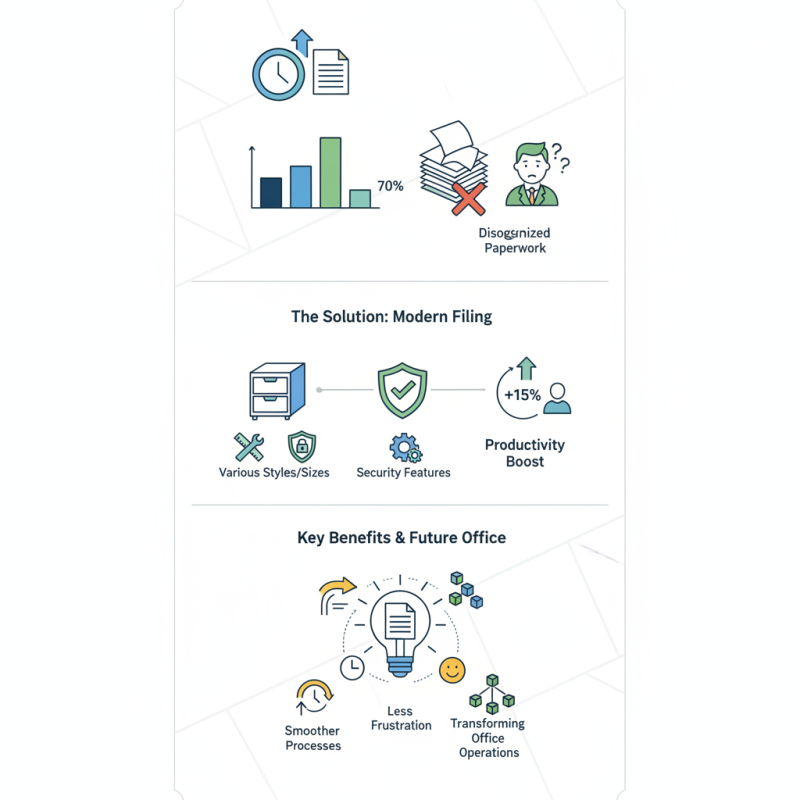
In today's fast-paced office environment, choosing the right filing cabinets is crucial. Business professionals face a growing challenge of managing documents effectively. According to a report by the International Association for Storage and Retrieval Systems, nearly 70% of all office workers struggle with disorganized paperwork. This chaos can lead to wasted time and decreased productivity.
Filing cabinets serve as a foundational solution for document organization. They come in various styles, sizes, and security features. Selecting the right one significantly impacts workflow efficiency. A study by the American Administrative Professionals Association reveals that a well-organized filing system can boost employee productivity by as much as 15%. However, many offices still rely on outdated cabinets that may not meet current needs.
Reflecting on these statistics, it's clear that investing in quality filing cabinets is not just about aesthetics. It's about functionality and reliability. Companies need to rethink their choices, ensuring they select cabinets that align with their specific needs. A thorough understanding of what filing cabinets offer can transform how offices operate. A good choice leads to smoother processes and less frustration in daily tasks.
When choosing filing cabinets for your office, several key factors come into play. First and foremost is the size and space available in your office. According to a survey by the International Workspace Association, 75% of offices face space constraints, impacting storage solutions. Therefore, understanding the dimensions of your workspace is essential for selecting the right cabinet. Consider models that can utilize vertical space, as upward storage can optimize limited floor areas.
Another important aspect is organizational features. Modern filing cabinets offer various configurations, from lateral drawers to vertical options, catering to different organizational needs. Research from the Office Furniture Buyer's Guide indicates that a well-organized workspace can enhance employee productivity by up to 30%. Features like adjustable shelves and label holders improve accessibility and organization.
Material and durability are also crucial. While metal cabinets provide robust protection, wooden options offer an aesthetic appeal. Reports suggest that 60% of employees prefer a visually pleasing environment. However, investing in quality materials is vital, as lower-quality options may need frequent replacement, leading to higher long-term costs. Always reflect on your unique needs to find the right balance between function and style.
| Feature | Description | Importance Level (1-5) | Typical Price Range |
|---|---|---|---|
| Material | Metal, wood, or plastic | 5 | $50 - $500 |
| Size | Tall, wide, or compact | 4 | $100 - $700 |
| Locking Mechanism | Keyed or combination locks | 4 | $20 - $150 |
| Drawer Configuration | Vertical or horizontal | 5 | $100 - $600 |
| Mobility | Wheels or stationary | 3 | $30 - $250 |
| Aesthetics | Colors and finish options | 4 | $50 - $400 |
| Warranty | Length and coverage details | 3 | Varies |
: The main types are vertical, lateral, and mobile filing cabinets. Each has unique features and benefits.
Vertical filing cabinets have a slim design. They fit well against walls, maximizing floor space in offices.
Lateral cabinets can hold both letter and legal-size files. They offer easy access but require more room.
Mobile filing cabinets can be easily moved. This flexibility is beneficial for dynamic workspaces.
Budget considerations are essential. Cost-effective options are suitable for startups, while premium options offer better durability.
Not necessarily. Price does not always reflect quality. Research user reviews and features before purchasing.
Consider your office layout, storage needs, and user feedback. Balance cost and functionality for best results.
The initial investment can be daunting. Businesses often weigh the cost against potential long-term benefits.
Affordable cabinets often have basic functionalities. They are lightweight and can start at low prices.
A well-organized filing cabinet enhances efficiency. It keeps documents accessible and helps maintain a tidy workspace.
When choosing the best filing cabinets for your office needs, several factors should be considered to ensure effective organization and functionality. Key considerations include the type of filing cabinets—whether vertical, lateral, or mobile—which can greatly influence the space and layout of your office. Additionally, materials and durability are crucial for long-lasting use, so selecting a cabinet made from robust construction is essential.
Organizational features such as swivel options, locking mechanisms, and dividers can enhance efficiency and security, allowing for better document management. Lastly, budget considerations play a significant role in the decision-making process, as you need to balance between cost-effective solutions and higher-end filing cabinets that may offer more features or durability. By carefully evaluating these aspects, you can find the perfect filing cabinets to meet your office's specific needs.

 Linkun Furniture